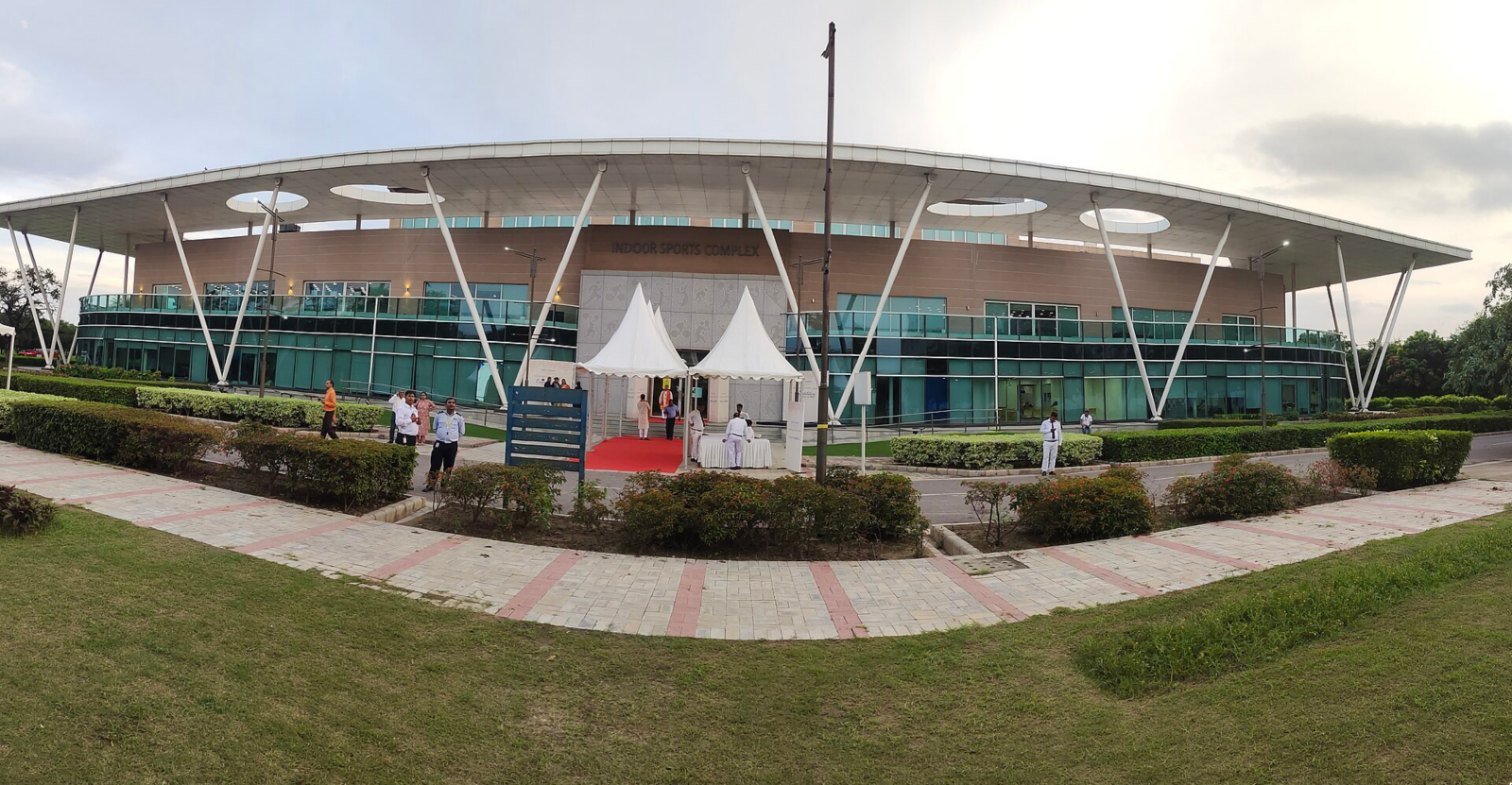
Shiv Nadar University Assignment Help for Majors, CCC and Research Work
Expert one-to-one academic support for students of Shiv Nadar Institution of Eminence, still widely called Shiv Nadar University, at its Delhi NCR campus near Greater Noida. We help you plan, research, analyse, write up and check essays, problem sets, lab reports, research papers, OUR projects, theses and dissertations, and prepare for quizzes, mid-semester and end-semester examinations.
Hyderabad-based teamSupporting students since 2019
A 150-credit UG degreeShare of credits
Major (108 credits)72%
Core Common Curriculum (18)12%
University-wide electives (18)12%
Floating credits (6)4%
Your semester at Shiv NadarTypical flow
Evaluation scheme announcedDone
Quizzes and assignmentsDone
Mid-semester and projectsIn progress
End-semester examinationNext
Turnitin similarity and AI report with every delivery
Open every day6 AM to 12:30 AM IST
2019Supporting students since
4,800+Projects supported
40+Countries served
30 to 45 minTypical Turnitin report turnaround
In short
Swift Academic Services is an independent, Hyderabad-based academic consultancy, founded in 2019, that supports students of Shiv Nadar Institution of Eminence (Shiv Nadar University, Delhi NCR) with major coursework, Core Common Curriculum and university-wide elective assignments, essays, problem sets, lab reports, research papers, Opportunities for Undergraduate Research (OUR) projects, theses, dissertations, data analysis, editing and Turnitin similarity and AI reports, and with preparation for mid and end-semester examinations. We are not affiliated with Shiv Nadar University or the Shiv Nadar Foundation.
Shiv Nadar University was established in 2011 by the Shiv Nadar Foundation, the philanthropic foundation of HCL founder Shiv Nadar, under an act of the Uttar Pradesh legislature. Its residential campus of about 286 acres lies at Dadri, near Greater Noida in Delhi NCR. In 2022 the Ministry of Education recognised it as an Institution of Eminence Deemed to be University, and it is now formally Shiv Nadar Institution of Eminence (Shiv Nadar IoE).
The university teaches through four schools: Engineering, Natural Sciences, Humanities and Social Sciences, and Management and Entrepreneurship, at undergraduate, master's and doctoral levels. Many undergraduate degrees are four-year research degrees, such as the B.Sc. (Research) and B.A. (Research), alongside B.Tech and the Bachelor of Management Studies. In the NIRF 2025 rankings it was placed 57th among universities and 85th overall.
What sets Shiv Nadar apart for students is its curriculum structure. Every undergraduate takes a Major, a Core Common Curriculum (CCC) of broad courses across disciplines and university-wide electives (UWE) outside the Major, and research is encouraged from the first years. Each instructor sets and announces the evaluation scheme for their course. Our job is to read that scheme with you and help you meet it.
Key facts
Official name
Shiv Nadar Institution of Eminence, Deemed to be University
Founded
2011, by the Shiv Nadar Foundation
Status
Institution of Eminence Deemed to be University since 2022
Campus
About 286 acres at Dadri, near Greater Noida, Delhi NCR
Schools
Engineering, Natural Sciences, Humanities and Social Sciences, Management and Entrepreneurship
UG credits
At least 150; at least 160 for engineering majors
Breadth
At least 18 credits each of CCC and UWE
Grades
A (10) to D (4) to pass, on a 10-point scale
To graduate
A minimum CGPA of 5.0
#57University
#85Overall
NIRF India Rankings 2025, published by the Ministry of Education.
Know how you are marked
How assessment works at Shiv Nadar
Before anyone can help with a Shiv Nadar assignment, they need to understand how it is marked. The university's undergraduate handbook leaves the evaluation scheme for each course to the instructor, who must announce it in class within a week of the first class, and requires evaluation to be uniform across batches. The structure below comes from Shiv Nadar's published undergraduate handbook; your course outline and instructor always have the final word.
UG degree structure
From the Shiv Nadar UG handbook
150Minimum credits: At least 150 credits for a UG degree; at least 160 for engineering majors
108Major credits: The university minimum for a Major; B.Tech needs at least 118
18CCC credits: Core Common Curriculum, from at least six of eight topic areas
18UWE credits: University-wide electives outside your Major
How a course is evaluated
Rules set out in the handbook
1 weekScheme announced: The instructor announces the evaluation scheme within a week of the first class
InstructorWho decides: The course instructor sets the components and weights
View daySee your scripts: Graded work and final answer sheets can be viewed on an announced day
Re-checkEnd-semester review: Re-evaluation is available for the end-semester component
Grade points
From the grading scale in the handbook
10A: The top grade on the 10-point scale
8B: With A- at 9 and B- at 7 in between
4D: The minimum passing grade
2E: A fail that can be cleared once, to a maximum of D
Aspect
Major courses
CCC courses
UWE courses
Research and OUR
What they are
Courses in your declared Major
Broad common courses across eight topic areas
Non-CCC courses outside your Major
Faculty-supervised research projects
Minimum credits
108 (118 for B.Tech)
18, up to 30 counted
18
Through REAL and related requirements
Typical work
Problem sets, labs, papers, exams
Essays, reflections, short papers, exams
Whatever the host department sets
Proposals, data, papers, presentations
Who sets the scheme
Course instructor
Course instructor
Course instructor
Faculty supervisor
Where the rules live
Course outline and handbook
Course outline and handbook
Course outline and handbook
OUR and department guidelines
The instructor sets the scheme
Each course's components and weights are decided by the instructor and announced in the first week. Two courses in the same semester can be marked very differently, so read every outline carefully.
You can see your marked work
Students can view graded components and final answer sheets on an announced viewing day, and can seek re-evaluation of the end-semester component within the window set by the Controller of Examinations.
Breadth is a requirement, not an extra
The CCC and UWE requirements mean most students take courses well outside their comfort zone. An engineering student may write a history essay; a sociology student may take a quantitative course.
Research is built into the degree
Many programmes are four-year research degrees, and the handbook also sets requirements for research, experiential and applied learning (REAL), alongside VELS and DISE components.
What we do
Our Shiv Nadar support services
Every Shiv Nadar student's term is different, so our support is modular. Pick the piece you need this week, or combine several for a large piece of work such as a project or dissertation.
01
Major, CCC and UWE coursework
Help with problem sets, essays, response papers, lab reports and presentations across your Major, CCC and UWE courses. We work from your course outline, explain the method, prepare referenced model answers you can learn from and review your own drafts.
02
Quiz, mid-semester and end-semester preparation
One-to-one tutoring, topic summaries, worked examples and practice questions for quizzes, mid-semester and end-semester examinations. We teach and prepare you; we never sit any test or examination on anyone's behalf.
03
Humanities and social science writing
Research papers, critical essays, literature reviews and response papers for English, history, sociology, international relations and economics students, built on real, checked sources.
04
Programming and lab work
Python, Java, C and C++, SQL, R and MATLAB work for courses such as data structures, DBMS, operating systems, networks and machine learning, with explained code and help keeping lab records complete.
05
Data analysis and statistics
Analysis in Python, R, SPSS, Excel, Stata and MATLAB: descriptive statistics, hypothesis tests, regression, factor analysis and machine learning models, explained in words you can repeat in a viva.
06
MBA and management assignments
Case analyses, financial and marketing reports, business analytics work, summer internship reports and presentation decks, built on recognised frameworks and real data.
07
Dissertations and research projects
Topic selection, proposal, literature review, methodology, data analysis, discussion, formatting to your template and viva preparation for undergraduate and postgraduate dissertations.
08
Postgraduate and PhD research support
Research proposals, literature reviews, methodology, statistical analysis, thesis editing and formatting and journal manuscript preparation for master's and doctoral scholars.
09
Internship reports
Structuring and editing internship reports, logs and presentations, while keeping your company's confidential information out of anything that leaves the organisation.
10
OUR and research projects
Stage-by-stage help with Opportunities for Undergraduate Research and other research projects: question, proposal, literature review, method, analysis, the write-up and presentation preparation.
11
Online programme support
Help for working professionals in Shiv Nadar's online degree programmes with modules, assignments, projects and end-term preparation, scheduled around their work.
12
Editing, formatting and Turnitin reports
Proofreading, structure and language editing, report formatting in Word or LaTeX, reference checking, plus standalone Turnitin similarity and AI writing reports, usually within 30 to 45 minutes.
Coverage
Shiv Nadar programmes we support
We support Shiv Nadar students across all of the groups below. If your programme is not listed, send us your course outline and evaluation scheme and we will tell you honestly whether we have the right specialist.
School of Engineering
4
B.Tech in computer science and engineering
B.Tech in electrical and computer engineering
B.Tech in mechanical, civil and chemical engineering
M.Tech and Ph.D.
School of Natural Sciences
4
B.Sc. (Research) in physics, chemistry and mathematics
Life sciences
Integrated and master's programmes
Doctoral research
Humanities and Social Sciences
4
B.A. (Research) in English and history
Sociology and international relations
Economics
Master's and doctoral programmes
Management and Entrepreneurship
4
Bachelor of Management Studies (BMS)
B.Sc. (Research) in economics and finance
MBA
Doctoral research
Breadth and minors
4
Core Common Curriculum courses
University-wide electives
Minors outside the Major
Specialisations
Research
4
Opportunities for Undergraduate Research
Honours and research theses
Master's dissertations
Ph.D. theses
Disciplines
Subjects and typical Shiv Nadar assignment tasks
Most Shiv Nadar assignments fall into a handful of families. Here are the subject areas we see most often from Shiv Nadar students, with the kind of task that usually arrives with them.
Computing and engineering
Typical courses
Programming, algorithms, data structures, machine learning, circuits, thermodynamics and process engineering.
Typical tasks
Problem sets, lab reports, code and design projects.
Natural sciences
Typical courses
Physics, chemistry, mathematics and the life sciences.
Typical tasks
Problem sets, lab reports, proofs and research write-ups.
Humanities
Typical courses
Literature, history, philosophy and the arts.
Typical tasks
Critical essays, research papers and response papers.
Social sciences
Typical courses
Sociology, international relations, economics and public policy.
Typical tasks
Research papers, data analysis in R or Stata and policy briefs.
Management
Typical courses
Strategy, marketing, finance, entrepreneurship and business analytics.
Typical tasks
Case analyses, venture plans, practicum reports and presentations.
CCC topics
Typical courses
Broad courses across the eight CCC topic areas, from science and society to the arts.
Typical tasks
Short essays, reflections, quizzes and group presentations.
Beyond the classroom
Research, theses and internships at Shiv Nadar
Research runs through a Shiv Nadar degree. The handbook sets requirements for research, experiential and applied learning (REAL), and many undergraduate programmes are four-year research degrees that end in substantial independent work. Management students in the BMS complete internships in both the social sector and the business sector, and master's and doctoral students write dissertations and theses.
These pieces are large and carry real weight, so planning them early pays off. The stages below show how a typical research project, thesis or internship report unfolds; your department and supervisor set the exact format, length and dates.
1
Question and scope
What is typically expectedA focused research question agreed with your faculty supervisor
How we helpSharpening the question and drafting a realistic proposal
2
Literature review
What is typically expectedA review of real sources that positions your study
How we helpFinding and summarising verifiable sources and building the argument
3
Method and data
What is typically expectedA sound design and properly collected or obtained data
How we helpResearch design and analysis in Python, R, Stata, SPSS or NVivo
4
Findings and discussion
What is typically expectedClear results, honest interpretation and limitations
How we helpTables, figures, interpretation and linking findings to the literature
5
Write-up and defence
What is typically expectedA thesis or paper in the required format, often with a presentation
How we helpStructure, formatting, references, a Turnitin report and mock questions
Internship reports
BMS students complete two internships, one in the social sector and one in business. We help you decide what to record, structure each report around the work you actually did and keep confidential organisational information out of it.
Getting the scope right
A project that tries to answer everything usually runs out of time; one that asks a clearly bounded question and discusses its limitations honestly usually scores well. Much of our early work is helping you find that question.
Flagship research programme
Opportunities for Undergraduate Research (OUR)
Opportunities for Undergraduate Research, known as OUR, is described by the university as one of its pioneering and flagship programmes. It lets undergraduates conduct original research with faculty members in any discipline, and the university says many undergraduates have published their work through it; its ninth edition in 2022-23 ran with 150 approved projects.
OUR projects reward a clear question, a careful method and honest reporting. They usually involve a proposal, reading, data collection or experiments, analysis and a written report or paper, often with a presentation.
We help OUR students sharpen their questions, review literature, plan and run analyses, structure papers in the conventions of their discipline and prepare for presentations, while the research and conclusions stay their own.
An OUR project
Who
Undergraduates with a faculty supervisor
Scope
Any discipline
Output
Report, paper or presentation
Edition
Ninth edition in 2022-23
Our support
Planning
Question, proposal and timeline
Analysis
Statistics, code and data
Writing
Structure, clarity and references
Ethics
Real data and sources only
How grades are given
Grades and academic standing at Shiv Nadar
Shiv Nadar grades courses on a 10-point scale: A (10), A- (9), B (8), B- (7), C (6), C- (5) and D (4), where D is the minimum passing grade. An E (2) is a fail that can be cleared with one retest, to a maximum grade of D, and F or F* (0) is a fail, with F* marking an attendance shortfall.
The degree is awarded only with a minimum CGPA of 5.0. Students whose CGPA falls below 5.0 at the start of a semester are placed on academic probation, with a 20-credit cap and other restrictions, and a CGPA below 4.0 after the second semester can end the student's admission.
Because every grade feeds the CGPA, steady work across all courses, including CCC and UWE courses outside your Major, protects your standing. We help you plan the semester so that every course gets the attention it needs.
grading_rules.md
# PassA to D
Grade points from 10 down to 4
# RetestE
One retest, to a maximum of D
# StandingCGPA 5.0
Needed to graduate and to avoid probation
Summarised from the Shiv Nadar undergraduate handbook. Check the current handbook for your own batch.
Breadth by design
Core Common Curriculum and university-wide electives
Every Shiv Nadar undergraduate must earn at least 18 credits from the Core Common Curriculum, with at least 1.5 credits from any six of its eight topic areas, and at least 18 credits from university-wide electives, which are non-CCC courses outside the student's Major. A further 6 floating credits can come from CCC, UWE or other approved courses, and select SWAYAM online courses can count within set limits.
These courses are where many students meet unfamiliar kinds of work: an engineer writing a reflective essay, an English major handling statistics. We help you understand what each task expects, plan your time across very different courses and produce clear, well-structured work in your own voice.
CCC and UWE tasks we help with
8
Reflective essays
Short research papers
Response papers
Quantitative problem sets
Group presentations
Quiz preparation
SWAYAM course assignments
Exam revision plans
Rules that matter
Attendance and academic integrity
Attendance is mandatory at Shiv Nadar. The undergraduate handbook permits a shortfall of no more than 25% in each course, which means at least 75% attendance. A shortfall leads to an F* grade, and students below the requirement are not issued admit cards for the end-term examination.
The university also has a published policy on academic malpractice and plagiarism. Reported cases go to a hearing, and penalties can include an F in the course. That is why everything we provide is designed for learning: explanations, model answers and feedback you study and build on, with real sources and a Turnitin report, never work to be submitted as your own.
Key rules
Attendance
At least 75% in each course
Shortfall
F* grade and no admit card
Malpractice
Hearing, with penalties up to an F
Re-evaluation
End-semester component, within the set window
Where you study
Support for every Shiv Nadar campus
A research university by designCentral Library, Delhi NCR campus
Shiv Nadar teaches on one residential campus in Delhi NCR, but each school and department runs its own courses and expectations. Here is how we support each group.
Engineering
School of Engineering
B.Tech, M.Tech and doctoral students, supported with problem sets, labs, code and projects.
Sciences
School of Natural Sciences
Physics, chemistry, mathematics and life science students, supported with proofs, labs and research.
Humanities
Humanities and Social Sciences
English, history, sociology, IR and economics students, supported with writing and research.
Management
Management and Entrepreneurship
BMS and MBA students, supported with cases, practicums and internship reports.
Research
OUR researchers
Undergraduates on OUR projects, supported with methods, analysis and writing.
Chennai
Shiv Nadar University Chennai
Students of the separate Chennai university, supported to their own rules.
Worldwide
International students
Students from abroad, supported with clear explanations of course expectations.
Postgraduate
Master's students
Postgraduates, supported with coursework, dissertations and research methods.
Doctoral
Doctoral scholars
Research scholars, supported with proposals, analysis, thesis editing and manuscripts.
Hands-on work
Software and tools we work in
Shiv Nadar coursework spans spreadsheets, statistics packages, code and design tools. Our specialists work in the software your course uses, and we deliver files you can open, run and modify yourself.
Python
Jupyter Notebook
Google Colab
scikit-learn
TensorFlow
Pandas
R and RStudio
SPSS
Stata
AMOS
SmartPLS
Excel and financial models
Power BI
Tableau
SQL
MySQL
Python
Jupyter Notebook
Google Colab
scikit-learn
TensorFlow
Pandas
R and RStudio
SPSS
Stata
AMOS
SmartPLS
Excel and financial models
Power BI
Tableau
SQL
MySQL
Java
C and C++
MATLAB
Simulink
Verilog
Arduino
AutoCAD
SolidWorks
ANSYS
NVivo
Figma
PowerPoint and Google Slides
Zotero and Mendeley
EndNote
LaTeX and Overleaf
Git and GitHub
Java
C and C++
MATLAB
Simulink
Verilog
Arduino
AutoCAD
SolidWorks
ANSYS
NVivo
Figma
PowerPoint and Google Slides
Zotero and Mendeley
EndNote
LaTeX and Overleaf
Git and GitHub
Presentation
Referencing and formatting for Shiv Nadar work
There is no single referencing style across Shiv Nadar; use the one your instructor or department specifies. Engineering and the sciences often use IEEE or a journal style, the social sciences and management commonly use APA or Chicago author-date, and the humanities often use MLA or Chicago notes and bibliography.
We format to whatever style you are given and check every in-text citation against the reference list. Every reference we add is a real, verifiable source.
APA 7
Harvard
IEEE
Vancouver
OSCOLA
Bluebook
Chicago
MLA
Glossary
Shiv Nadar academic terms explained
New to Shiv Nadar, or helping someone who is? These are the terms you will meet most often in regulations, notices and conversations with faculty.
Shiv Nadar IoE
Shiv Nadar Institution of Eminence, Deemed to be University, the formal name since 2022.
CCC
Core Common Curriculum: broad courses across eight topic areas, at least 18 credits.
UWE
University-wide electives: non-CCC courses outside your Major, at least 18 credits.
Floating credits
Six credits that can come from CCC, UWE or other approved courses.
OUR
Opportunities for Undergraduate Research, the flagship undergraduate research programme.
REAL
Research, experiential and applied learning, a credit requirement in the handbook.
E grade
A fail worth 2 points that can be cleared once, to a maximum of D.
F* grade
A fail given for an attendance shortfall.
Academic probation
Status for students starting a semester with a CGPA below 5.0.
SWAYAM
The national online course platform; select courses can count for credit.
Four simple steps
How our Shiv Nadar support works
1
Share your brief and course outline and evaluation scheme
Send the assignment or project brief, the relevant page of your course outline and evaluation scheme, your deadline and anything you have already done on WhatsApp or email. For projects, include your review dates.
2
Get a plan and a clear quote
A subject specialist reviews the requirements, tells you what is realistic in the time available and proposes an approach. You get a fixed quote before any work starts, with 50% payable to begin.
3
Work in stages with check-ins
Larger work is delivered in parts, matched to your review dates, so you can review, ask questions and request changes before the next stage.
4
Receive files, report and walkthrough
You receive editable files, a Turnitin similarity and AI writing report and an explanation of the method, so you understand and can defend the work. The remaining 50% is due on delivery.
50% to start, 50% on delivery. Free quote, no prices hidden in small print.
Academic integrity
Using our support responsibly
Shiv Nadar has a detailed policy on academic malpractice and plagiarism, with penalties that can include an F in the course, and we respect it. Our support is designed to help you learn, meet requirements and present your own understanding well: explanations, tutoring, model solutions and worked examples you can study and build on, feedback on your drafts, editing and checking.
We also give you a Turnitin similarity and AI writing report with every delivery, so you can see exactly where the work stands before it goes anywhere near your instructor.
Our commitments
We never sit a quiz, mid-semester exam, end-semester exam, lab test or viva on anyone's behalf.
We never fabricate data, results, survey responses, company information or citations.
We keep internship, company and clinical data confidential and help you anonymise it.
We explain every method we use so you can answer questions about it in a viva.
We recommend you check your university's rules on outside help and use our material accordingly.
Why us
Why Shiv Nadar students choose Swift Academic Services
Supporting students since 2019
Swift Academic Services has supported more than 1,800 students across over 40 countries, from undergraduate assignments to doctoral theses.
Mapped to your course outline and evaluation scheme
We start from your course outline and evaluation scheme and Shiv Nadar's rules, not from a generic template, so effort goes where the marks are.
Subject-matched specialists
Your work goes to someone who knows the subject, whether that is econometrics, international relations, chemical engineering or computer science.
Turnitin report every time
Every delivery includes a Turnitin similarity and AI writing report, and standalone reports are usually ready within 30 to 45 minutes.
Hyderabad based, open late
Our team works from Hyderabad and is available every day from 6 AM to 12:30 AM IST, which suits evening study and online learners.
Fair 50/50 payment
Pay 50% to start and 50% on delivery, with revisions handled until you are satisfied with the agreed scope.
Do you help with Shiv Nadar University coursework?
Yes. We help with problem sets, essays, response papers, lab reports and presentations across your Major, CCC and UWE courses. We work from your course outline, explain the method, prepare referenced model answers and review your drafts.
How are courses evaluated at Shiv Nadar University?
Each instructor sets the evaluation scheme and announces it in class within a week of the first class. Students can view graded work and final answer sheets on an announced day, and can seek re-evaluation of the end-semester component.
What are CCC and UWE at Shiv Nadar?
CCC is the Core Common Curriculum, broad courses across eight topic areas, with at least 18 credits required. UWE means university-wide electives, non-CCC courses outside your Major, also with at least 18 credits.
What grade do I need to pass at Shiv Nadar?
D, worth 4 points, is the minimum passing grade. An E can be cleared once to a maximum of D, and the degree needs a minimum CGPA of 5.0.
Can you help with my OUR project?
Yes. We help you sharpen the question, review literature, plan and run the analysis, structure the paper and prepare the presentation, while the research and conclusions stay your own.
What attendance do I need at Shiv Nadar?
The handbook permits a shortfall of no more than 25% in each course, so at least 75%. A shortfall leads to an F* grade and no admit card for the end-term examination.
Do you help Shiv Nadar humanities and social science students?
Yes. We help English, history, sociology, international relations and economics students with research papers, critical essays, literature reviews and data analysis in R or Stata.
Do you support Shiv Nadar University Chennai students?
Yes. Shiv Nadar University Chennai is a separate university with its own rules, and we support its students online, working to their own regulations.
Can you help me prepare for Shiv Nadar exams?
Yes, through one-to-one tutoring, unit-wise summaries, worked examples and practice questions based on your syllabus. We do not take any test, quiz or exam on a student's behalf.
Is Swift Academic Services affiliated with Shiv Nadar?
No. Swift Academic Services is an independent academic support provider. We are not affiliated with, endorsed by or connected to Shiv Nadar Institution of Eminence (Shiv Nadar University, Delhi NCR) or any of its schools or campuses. We use the Shiv Nadar name only to describe the programmes and courses we support.
How do you make sure the work is original?
All work is prepared for your brief, every source is real and cited, and every delivery comes with a Turnitin similarity and AI writing report. We can also check your own draft, usually within 30 to 45 minutes.
How does payment work?
You receive a fixed quote before work begins. You pay 50% to start and the remaining 50% on delivery. There are no prices on this page because every Shiv Nadar task differs in scope; message us for a free quote.
Will my details and files be kept confidential?
Yes. We use your files only for your project, we do not publish your work, and we do not share your details. For internship and company-based work we also help you anonymise sensitive information.
Free quote
Have a Shiv Nadar assignment, project or report due?
Send us your brief and course outline and evaluation scheme on WhatsApp or email. A subject specialist will review it and reply with a plan and a free quote.
Swift Academic Services is an independent academic support provider and is not affiliated with, endorsed by or connected to Shiv Nadar Institution of Eminence (Shiv Nadar University, Delhi NCR) or any of its schools, campuses or programmes. Shiv Nadar, Shiv Nadar University and Shiv Nadar IoE and related names belong to their respective owners and are used here only to describe the courses we support. Campus photographs are from Wikimedia Commons and are credited on each image. Rankings, assessment patterns and programme details are taken from public sources and can change; always check your official regulations and course documents.
Maintained by Mohd Shakeb, founder of Swift Academic Services · Last updated